
The Knee-jerk 'No'

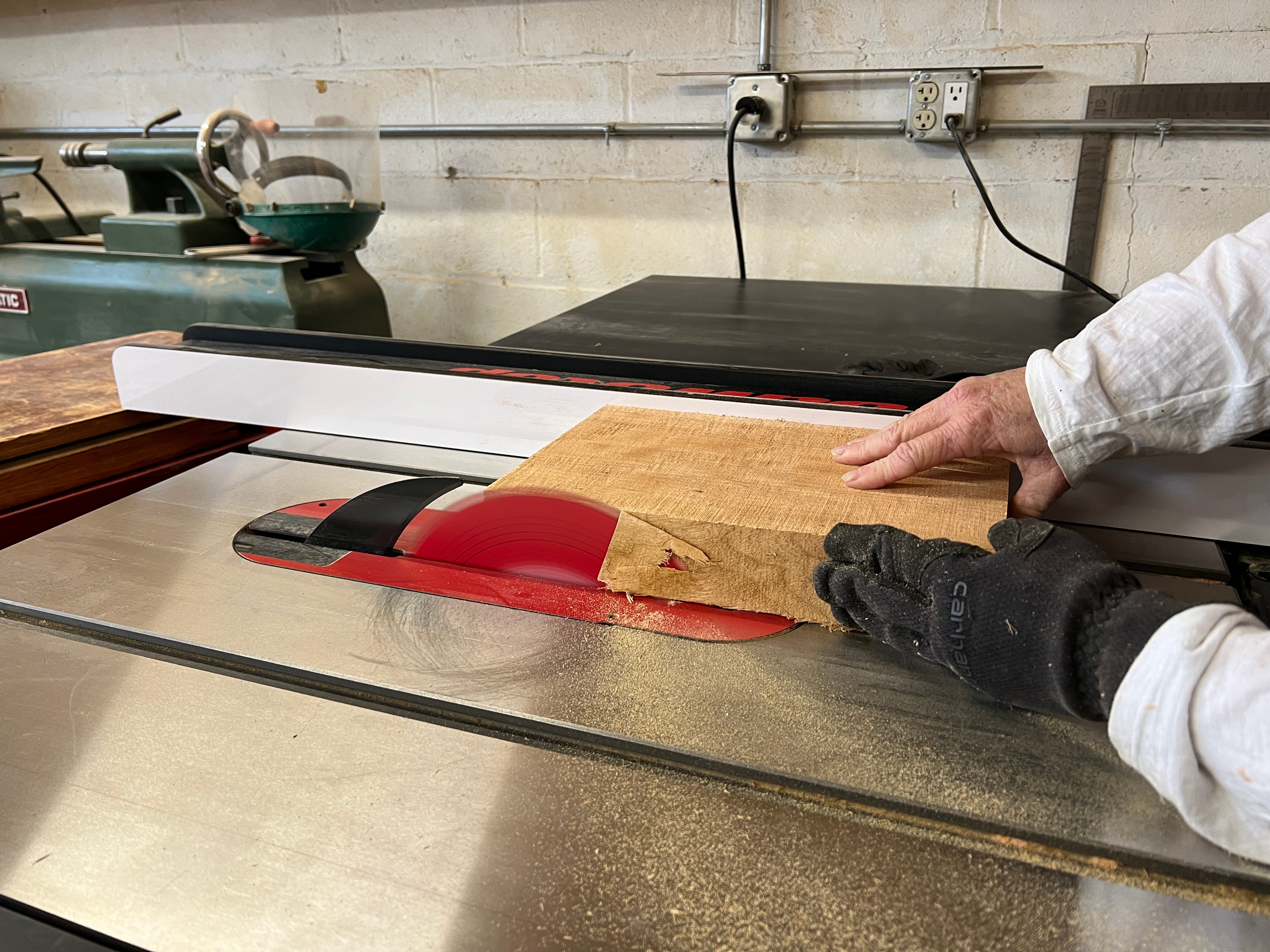
When Glen Huey started work at Popular Woodworking Magazine, he asked to write a blog entry about how he used gloves when machining rough stock.
“Absolutely yes,” I said. “Go for it.”
Glen left my cubicle and went into the shop. Megan (then the managing editor of the magazine) shot me a surprised look.
“You know what’s going to happen, don’t you?” she said. “He’s going to get eaten alive in the comments.”
“Maybe? Probably?” I replied. “Glen’s a grown man and can hold his own. Both the commenters and Glen might learn something.”
I was right. It was a shit bath. Or a blood show. Anyway, when it was all over, Glen figured out how to navigate the troll-y comments from a blog entry. And the trolls on our blog had a new-found respect for the fact that yes, there are times that gloves can be used with machines.1
I hate the fact that so much of woodworking is telling people all the things they cannot do. You can’t rest a handplane on its sole. You can’t use oil- and water-based finishes on the same piece. You can’t finish only the top of a table. You can’t use lumberyard wood to make a chair. You can’t wipe on shellac. You can’t use nails in fine furniture. You can’t assemble furniture with cross-grain assemblies.
On and on. And wrong and wrong.
The longer I study and work in the craft, the more I realize that the rules are flexible. And so when people ask me if they can do something that sounds crazy (“Can I use Alligator Juniper to make a chair?”), my default answer is this: Go for it. The numbers are against you. But the numbers were against life ever forming on this planet.
I’ve also learned that both deep ignorance and deep knowledge are superpowers. So much of what we think we know about wood movement ignores the idea of “hysteresis.” I wrote a column about it. Here’s a link.
Once you can see your work in the grand scheme of things like this, you can worry a little less.
Or, once you have no idea that this is a problem, you can worry a little less.
So mostly, my advice to our apprentices here is based on observing old work and setting aside modern advice. And saying yes.
“Should I wedge my tenons across the annular rings? Or parallel to them?”
The historical record says: Yes!
“Can I nail a tabletop to the base below?”
Hell yes, you can.
“Can I use shellac to…?”
Yes. Just yes.
The things we can’t do are greatly outnumbered by the things we can. And if you don’t try it, you’ll never find out for yourself if it works, or if you should wear tight-fitting gloves while running material over the jointer.
The trolls say you can’t.
What do you say?
Megan here; I now wear gloves during (some) stock prep; cuts down on splinters…thanks, Glen!
Well, Chris, it turns out Alligator Juniper is indeed NOT a good chair material, at least according to some hammer tests 😅. But thank you for your original response, it pushed me to learn more about the values listed on the The Wood Database and what they truly mean (and their limitations); peviously I really only understood janka.
Now I'm using it for practice / mock-ups.
Yes!
I built a sideboard about 6 years ago that had a bunch of experimental (for me at least) construction. The rectangular box is dovetailed pine, like an oddly shaped and oversized tool chest. The ends were "veneered" cherry. The pine is over an inch thick, and the cherry is over an inch. 2-1/4" altogether.
Everything says "you can't laminate two different species like that! Except you can. No splitting, no cupping, no issues.